

Australia's woodlands and coastal forests are home to some of the world's most impressive megabats, including the Grey-headed Flying-fox (Pteropus poliocephalus), Black Flying-fox (Pteropus alecto), Spectacled Flying-fox (Pteropus conspicillatus), Little Red Flying-fox (Pteropus scapulatus), and the island-endemic Christmas Island Flying-fox (Pteropus natalis). Distributed across northern and eastern mainland Australia and remote offshore territories, these unique mammals share an intricate relationship with our environment. Far from being mere pests, they act as essential "forest gardeners" whose survival is fundamentally intertwined with the health of the Australian bush.
As keystone species, their ecological importance is profound. Feeding primarily on native blossoms, nectar, and fruits, flying-foxes travel immense distances each night, driving long-distance pollination and seed dispersal for hundreds of native tree species, including iconic eucalypts.
Size & Appearance
The physical dimensions of Australia's flying-foxes vary significantly by species. The Grey-headed Flying-fox (grey head, orange-red collar) and Black Flying-fox (almost completely black, with slight rusty red collar) are the largest, each weighing up to 1 kilogram with a wingspan stretching up to more than a metre. In contrast, the Spectacled Flying-fox is identified by prominent pale yellow fur around its eyes. The Little Red Flying-fox is the smallest mainland species, averaging 300 to 600 grams with a reddish-brown coat, while the compact Christmas Island Flying-fox weighs up to 500 grams with dark, silver-tipped fur.
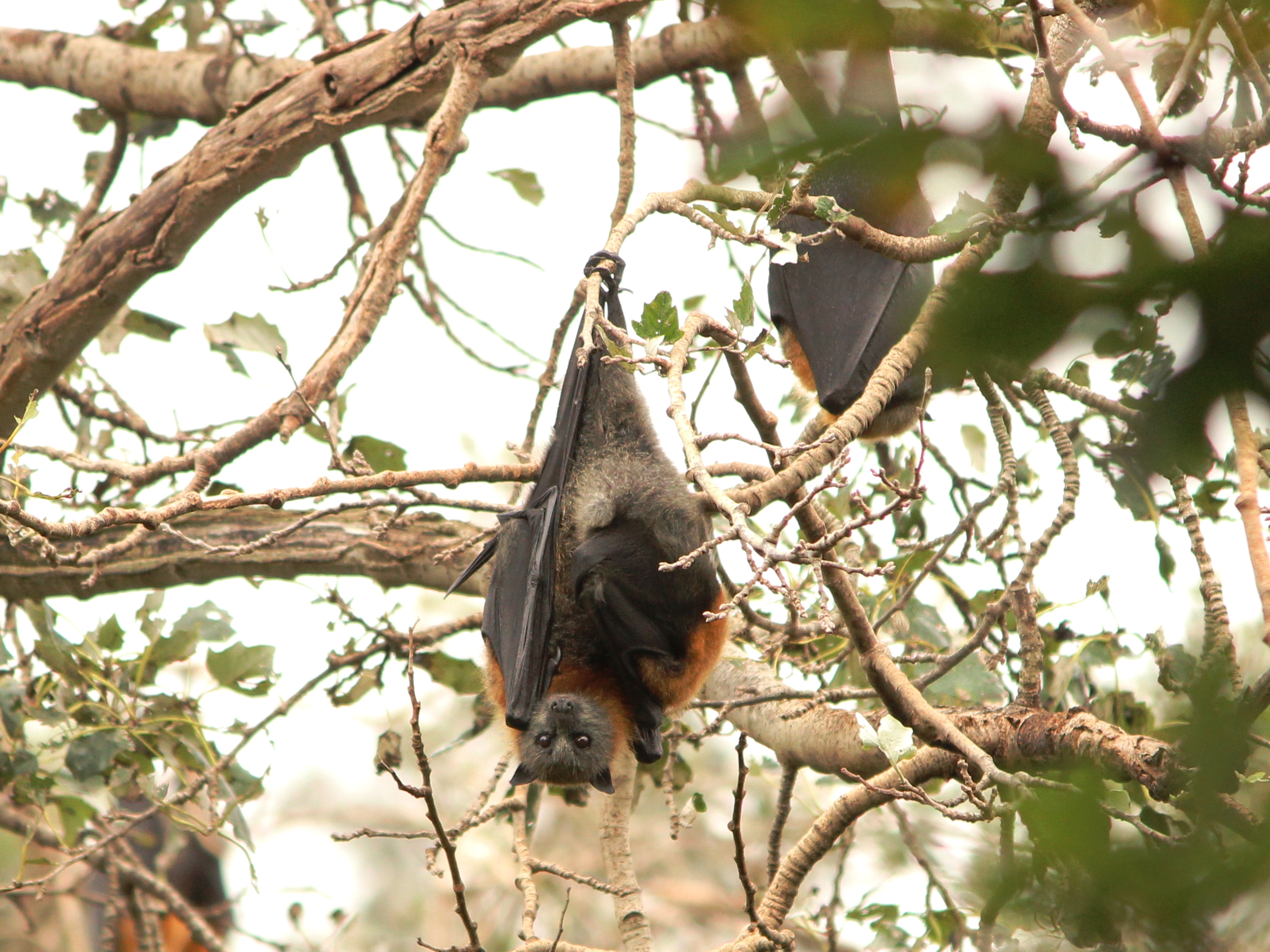
Grey-headed Flying-fox in East Gippsland. Image: Echidna Walkabout Nature Tours.
Evolutionarily, these bats lack tails and do not use echolocation. Instead, they possess large eyes adapted for acute night vision and an exceptional sense of smell to locate nocturnal blossoms. Their lower limbs utilize a specialized tendon-locking mechanism, allowing them to hang upside down effortlessly without expending muscle energy.
Behaviour & Diet
Strictly nocturnal, flying-foxes spend their days resting in large communal roosts called "camps". These camps are highly social, bustling environments that can house thousands - or in the case of the nomadic Little Red Flying-fox, hundreds of thousands - of bats. At dusk, the colony awakens for a spectacular synchronised "fly-out," streaming across the twilight sky to forage up to 50 kilometres away.
Their diet is entirely herbivorous, consisting of nectar, pollen, and native fruits like figs. They crush food to swallow the nutrient-rich juices, spitting out the seeds and fibrous pulp. This foraging behaviour makes them the primary drivers of forest regeneration across the continent.
Breeding & Life Cycle
Breeding timelines are precisely synchronised with seasonal food availability. Grey-headed and Spectacled flying-foxes mate in autumn, giving birth to a single pup after a six-month gestation period. Conversely, the Little Red Flying-fox mates in late spring and gives birth five months later in autumn. Remarkably, the Christmas Island Flying-fox displays rapid development, with young females capable of becoming pregnant at just six months old.
Newborn pups are born dependent and cling tightly to their mother's belly fur. Mothers carry them during nightly foraging trips for the first few weeks before leaving them in specialized "nursery trees" within the camp. Pups are weaned and independent at around five to six months of age.
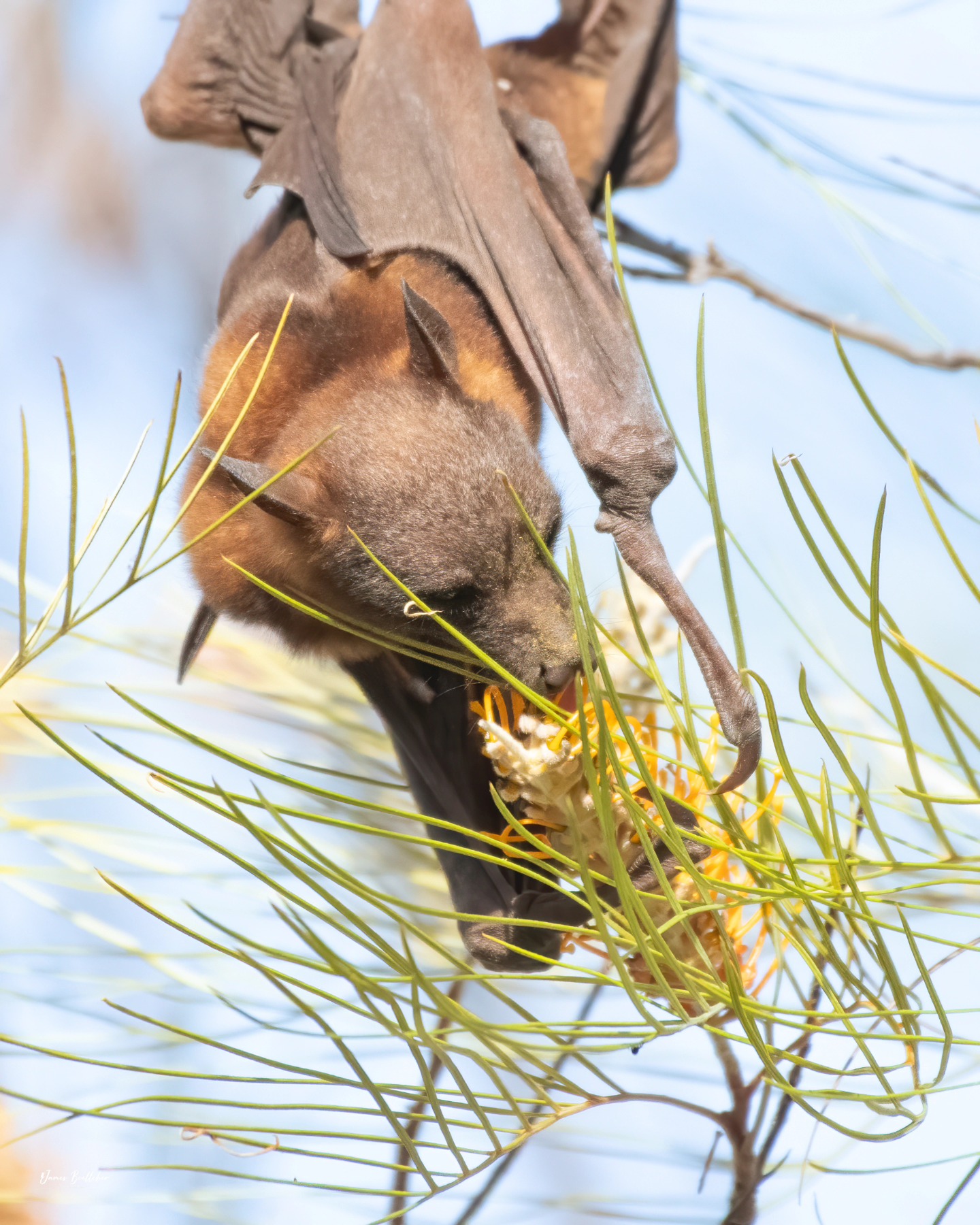
Little Red Flying-fox feeding. Image: FNQ Nature Tours.
Conservation & Threats
The conservation status of Australia's flying-foxes reflects significant ecological pressure. While the Little Red Flying-fox remains Least Concern, the Grey-headed Flying-fox is listed as Vulnerable, the Spectacled Flying-fox is Endangered, and the Christmas Island Flying-fox is Critically Endangered under the federal EPBC Act. Primary threats include habitat loss from land clearing and extreme weather driven by climate change. Intense summer heatwaves have caused catastrophic mass die-offs, with a single 2018 event wiping out a third of the Spectacled Flying-fox population. Urban conflicts also pose risks, including entanglement in fruit netting and power lines.
Amidst these severe challenges, vital community-led conservation initiatives are offering a critical lifeline. Located on the Atherton Tablelands in Far North Queensland, the world-renowned Tolga Bat Hospital works tirelessly to rescue, rehabilitate, and release thousands of displaced, sick, and orphaned bats annually - particularly Spectacled Flying-foxes heavily impacted by native paralysis ticks. Wildlife enthusiasts can gain a fascinating behind-the-scenes look at these intensive rehabilitation efforts through an expert-led excursion with FNQ Nature Tours, which proudly supports the hospital's work in nursing these essential mammals back to health while fostering greater public appreciation.
Where to see flying-foxes in the wild
Ethical observation of flying-foxes offers an unforgettable wildlife spectacle. Massive camps can be viewed along the riverbanks of eastern Australia, such as the Yarra River in Victoria or parklands in Brisbane and Sydney. To spot the Endangered Spectacled Flying-fox, the tropical rainforest fringes of Far North Queensland, particularly around Cairns, offer exceptional viewing. In Byron Bay, Australia's two largest species, the Grey-headed Flying-fox and Black flying-fox, are regularly sighted.
When observing a camp, it is critical to stay at a respectful distance. Avoid making loud noises or using bright lights, as disturbing a daytime roost causes immense stress to the colony and can disrupt vital resting and breeding cycles.
Some of the best places to see them include:
Atherton Tablelands, Queensland
Suggested Atherton Tablelands tours:
- Atherton Tablelands Nature & Wildlife (1 Day) - FNQ Nature Tours
- Ultimate Wildlife North Queensland (3 Days) - FNQ Nature Tours
East Gippsland, Victoria
Suggested East Gippsland tours:
- East Gippsland Wildlife Journey (4 Days) - Echidna Walkabout Nature Tours
Christmas Island (Australian External Territory)
Suggested Christmas Island tours:
- Christmas Island Ultimate Wildlife (8 Days) - Indian Ocean Experiences
Byron Bay (New South Wales)
Suggested Byron Bay tours:
- Byron Bay Wildlife Safari (1 Day) - Vision Walks Eco-Tours
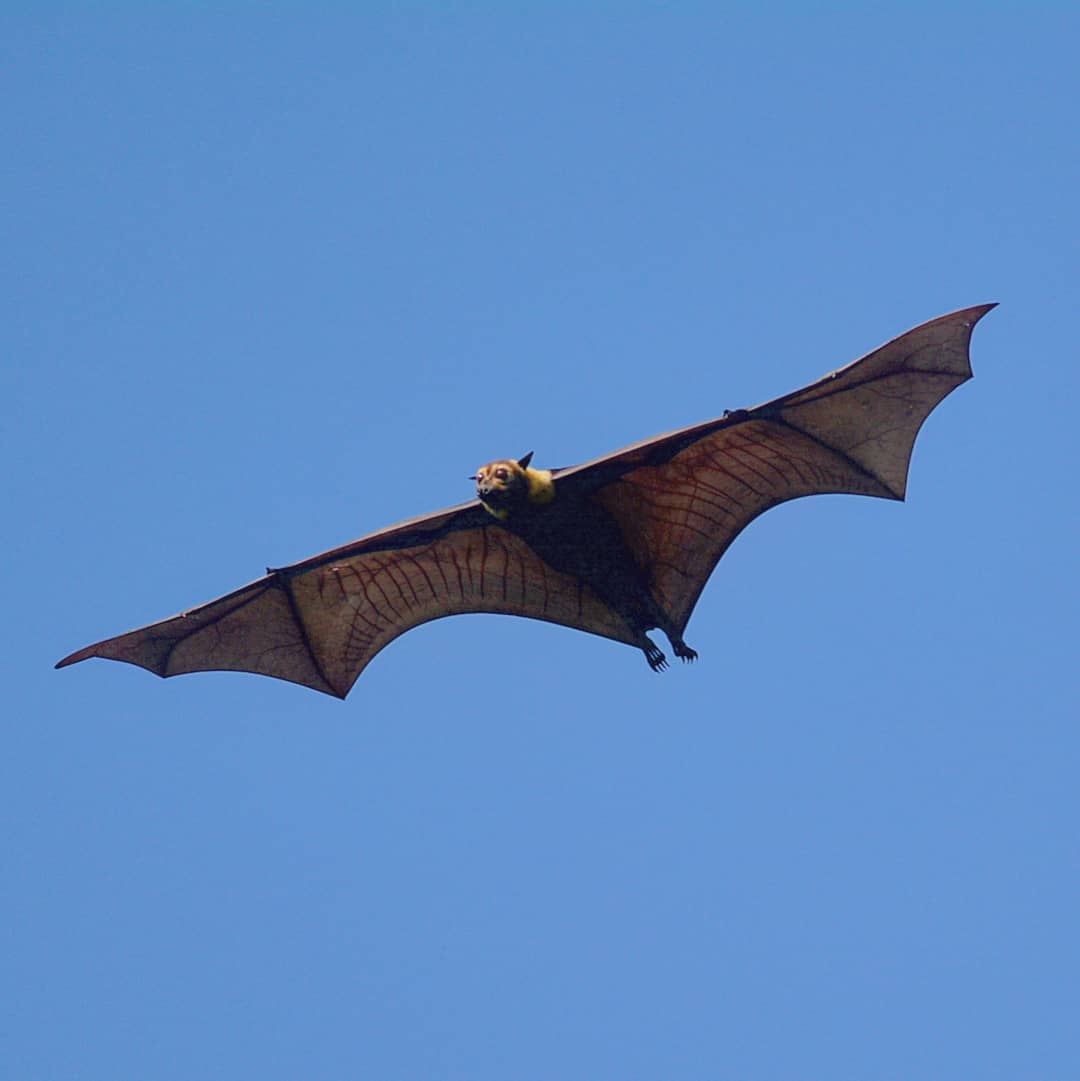
Spectaculed Flying-fox in flight. Image: FNQ Nature Tours.
FAQs
How do flying-foxes see at night?
They rely on large eyes for excellent night vision, combined with an acute sense of smell to track down flowering native trees.
Are flying-foxes dangerous to humans?
They are not dangerous if left alone. A small percentage can carry Australian Bat Lyssavirus (ABL), which is only transmitted via deep bites or scratches; therefore, you should never handle a wild bat and instead contact a licensed wildlife rescue group if you find one in distress.
Why do flying-foxes live in urban towns?
As their natural forest habitats have been increasingly cleared for development over many decades, flying-foxes are drawn to urban parklands and gardens that offer reliable, year-round water sources and a steady supply of flowering native trees.