

Long before Maria Island earned its national park status in 1972, the land bore the heavy footprint of early agriculture, with large areas of native habitat cleared for sheep grazing and ambitious winemaking ventures. While much of the island has retained its natural wilderness, key coastal areas continue to suffer from erosion caused by land clearing more than half a century ago.
To bring the habitat back to its former state, The Maria Island Walk team has been actively working on a revegetation project at Four Mile Headland. "Back in 2014, we decided that we needed to assist in reversing the decline of habitat in this area," says Operations Manager, Ben Brown. "The main reasons were to stop erosion, but also to bring back some of the native birdlife."
Rather than introducing outside plant varieties, the team took a localised approach, choosing species like Coastal Wattle and Casuarina because they were already thriving in surrounding pockets of the island. "We took seed from those local plants, grew them, and we've now planted about 1,000 trees over the last ten years," Brown explains. Harvesting seeds directly from local specimens ensured the new flora maintained genetic consistency with the island's native ecology while building natural resilience against harsh coastal conditions.
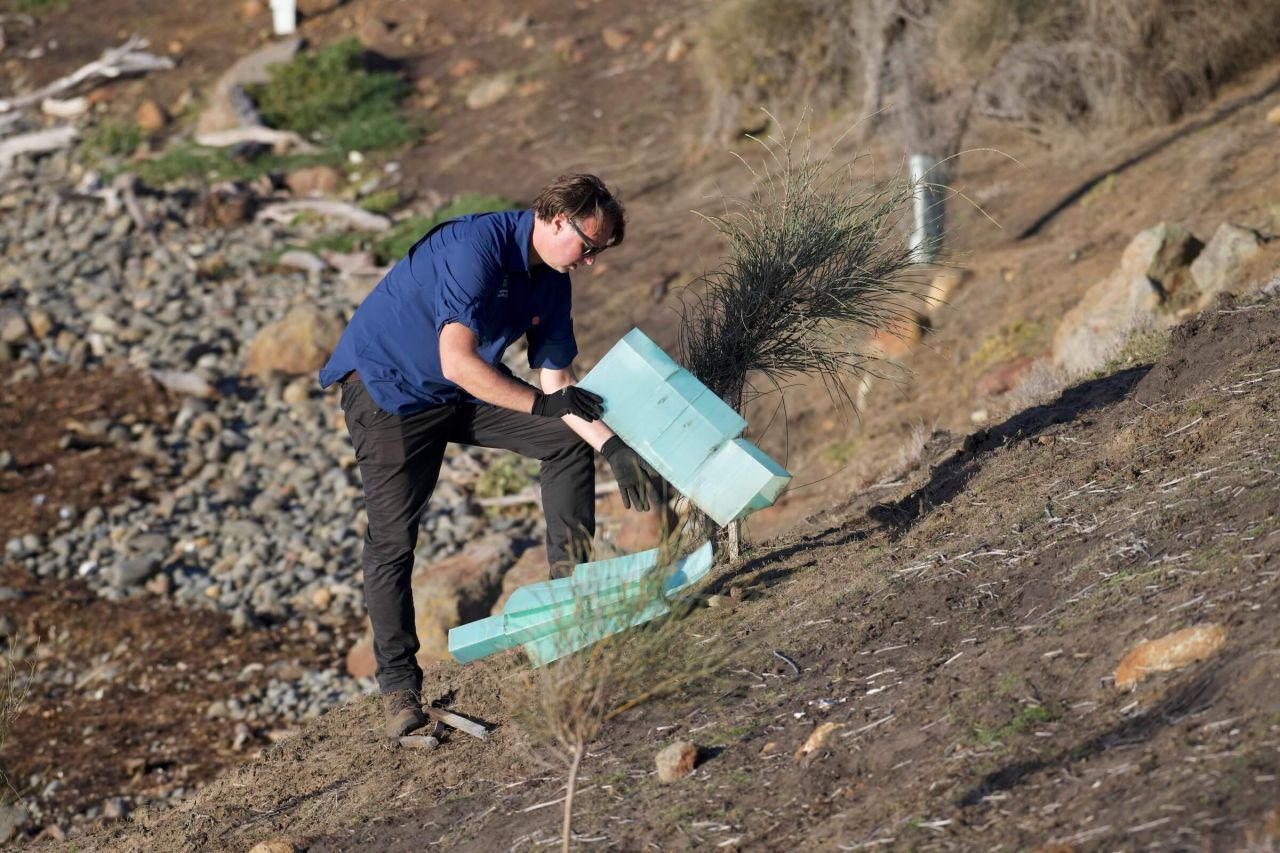
Image credit: The Maria Island Walk
The decade-long effort is showing visible rewards as native wildlife begins returning to the headland. Grazing marsupials are now regular sightings among the plantings, feeding and using it for shelter, while several bird species flit through the developing shelter belt. "We're seeing quite a few Bennett's wallabies and wombats, as well as birdlife like green rosellas and thornbills," Brown reflects. "Ultimately, we could potentially seven yellow-tail black cockatoos, who seem to like feeding in the sheoaks."
The physical transformation of the headland stands as a testament to patient, staged restoration. Since the initial efforts began back in 2014, the project has rolled out in steady phases, with the earliest planted trees now flourishing at around three metres tall. "We're talking with Tasmania Parks and Wildlife Service about continuing the planting," Brown added.
With guests staying at the nearby White Gums Camp on night two of The Maria Island Walk, the Four Mile Headland Revegetation Project is a tangible example to share with guests about Wild Bush Luxury's long-term commitment to preserving Maria Island's natural environment.
The Maria Island Walk
Maria Island National Park lies just a few kilometres off Tasmania's east coast, easily accessible from Hobart. It's spectacular landscapes, combined with a rich concentration of wildlife, has contributed to its nickname as 'Tasmania's Noah's Ark'.
Founded in 2002, The Maria Island Walk was created as a soft adventure experience accessible to most, where packs are light, the food is gourmet, the wine is Tasmania's best, and each night there is a comfortable bed. More than two decades on, The Maria Island Walk continues to showcase this remarkable destination to a new band of travellers that valued natural wildlife encounters in remote and tranquil settings, combined with world-class hospitality.
The team takes great pleasure in offering an authentic Tasmanian experience, bringing to life local history and culture, rare Tasmanian wildlife, spectacular scenery, and fascinating penal history. Testimony to the success of this unbeatable formula is the string of national and state awards that has made The Maria Island Walk one of the most desired guided experiences in the country.
Learn More